
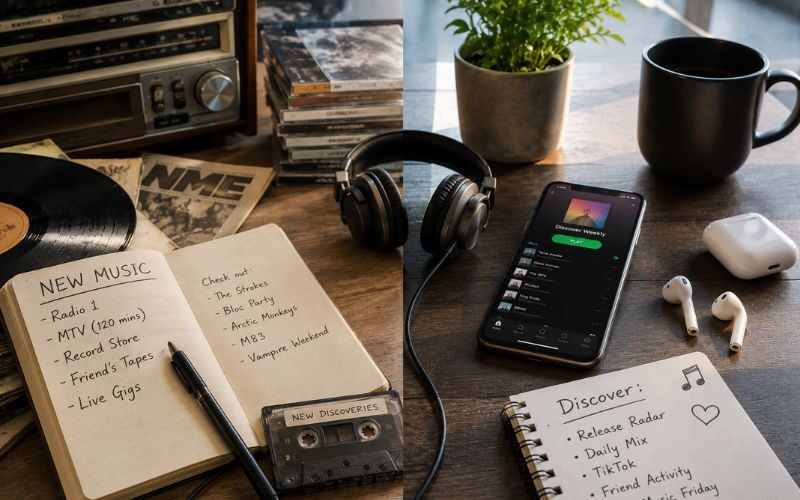
Not long ago, discovering new music was a very different experience. You might have heard a song on the radio during your morning commute, borrowed an album from a friend or spent an afternoon browsing through CDs at a local record store. Finding a new favorite artist often required patience, curiosity and sometimes a bit of luck.
Today, music is available almost instantly. With just a few taps, streaming services can recommend thousands of songs based on listening habits, favorite genres and even the time of day. Social media introduces new artists overnight, while personalized playlists make discovering music easier than ever before.
Streaming has transformed not only how we listen to music, but also how we find it. The journey from discovering a song to becoming a fan has become faster, more personal and increasingly driven by technology.
Before Streaming, Music Discovery Was More Personal
For decades, discovering music depended largely on people rather than algorithms.
Radio presenters introduced listeners to new releases, music magazines reviewed upcoming albums and friends exchanged recommendations. Many people remember walking into a record store with no specific goal, leaving with an album simply because the cover artwork caught their attention or a staff member recommended it.
Television also played an important role. Music channels introduced audiences to artists from around the world, while concerts and festivals created opportunities to discover bands that might otherwise have gone unnoticed.
Although the process was slower, it often felt more deliberate. Each discovery carried a sense of excitement because new music was less accessible than it is today.
The Streaming Revolution
Streaming services changed everything.
Instead of purchasing individual albums or downloading songs, listeners suddenly gained access to millions of tracks through a single subscription. Music libraries that once filled shelves could now fit inside a smartphone.
This enormous accessibility fundamentally changed listening habits. People no longer needed to decide whether an album was worth buying before hearing it. They could simply press play, skip tracks they did not enjoy and immediately move on to something new.
The barrier between curiosity and discovery became almost invisible.
Algorithms Became the New Music Guides
One of the biggest changes introduced by streaming platforms is the use of recommendation algorithms.
Rather than relying solely on editors or radio presenters, streaming services analyze listening behavior to suggest music that matches individual preferences. Every song played, skipped, liked or added to a playlist helps shape future recommendations.
This personalization offers several advantages.
- Listeners discover artists they might never have found otherwise.
- Recommendations improve over time as listening habits evolve.
- New releases from favorite artists appear automatically.
- Genre-specific playlists introduce unfamiliar songs that match personal taste.
For many people, discovering music has become a continuous experience rather than something that happens occasionally.
Playlists Have Become the New Albums
Albums once defined how most people experienced music. Today, playlists often play that role instead.
Many listeners create playlists for different moods, activities and moments throughout the day. Others rely on playlists curated by streaming platforms, artists or music enthusiasts.
Whether someone is working, exercising, relaxing or traveling, there is usually a playlist designed for that situation.
This shift has also influenced how artists release music. Instead of focusing exclusively on complete albums, many musicians now release individual singles more frequently in order to remain visible within playlists and recommendation systems.
Social Media Has Become a Powerful Discovery Tool
Streaming is no longer the only place where people discover music.
Short-form video platforms have become one of the most influential sources of new songs. A single clip lasting only a few seconds can introduce millions of people to an artist almost overnight.
Many of today’s biggest hits first gained attention through viral videos, dance challenges or popular creators before climbing streaming charts.
This has created a unique relationship between social media and streaming platforms. One encourages discovery while the other makes it effortless to continue listening.
The Advantages of Modern Music Discovery
Streaming has opened the door to an incredible variety of music.
Listeners can now explore artists from countries they have never visited, discover niche genres and instantly compare different interpretations of the same song.
Some of the biggest benefits include:
- Access to millions of songs at any time.
- Personalized recommendations based on listening habits.
- Easy exploration of new genres.
- Instant access to newly released music.
- The ability to create and share playlists with others.
For independent artists, streaming has also created opportunities to reach audiences without relying entirely on traditional record labels.
Are We Missing Anything?
Despite its many advantages, streaming has also changed the relationship people have with music.
With so much available instantly, listeners sometimes spend more time skipping songs than fully experiencing them. Albums are often interrupted after only a few tracks, while recommendation algorithms can gradually reinforce existing preferences instead of encouraging completely unexpected discoveries.
Many music enthusiasts still enjoy browsing vinyl stores, attending live performances or receiving recommendations from friends because these experiences often lead to more memorable discoveries than an automated playlist.
Technology has made music easier to access, but human curiosity continues to play an important role.
What the Future Might Look Like
Music discovery continues to evolve.
Artificial intelligence is becoming increasingly capable of understanding listening habits, moods and personal preferences. Future recommendation systems may become even more accurate, introducing listeners to music that perfectly matches a particular moment or activity.
At the same time, many people are actively seeking more authentic ways to discover music through communities, independent creators and live events. The future will likely combine intelligent technology with genuine human recommendations.
A New Era of Music Discovery
Streaming has fundamentally changed how people connect with music. What once depended on record stores, radio stations and word of mouth is now supported by powerful recommendation systems, curated playlists and social media.
Yet the excitement of discovering a song that instantly becomes a favorite has remained the same. Whether that moment happens through a friend’s recommendation, a viral video or a personalized playlist, the emotional connection to music continues to be just as meaningful.
Technology has transformed the journey, but the joy of finding great music is something that never goes out of style.